
THE CORPORATE VEIL IN NIGERIA: WHAT IT MEANS AND WHEN IT CAN BE LIFTED
September 14, 2026GOVERNOR’S CONSENT VS CERTIFICATE OF OCCUPANCY.
September 17, 2026
For decades, equality has been a rallying cry for social reform, human rights movements, and international observances—such as International Women’s Day and its focus on “DigitALL: Innovation and technology for gender equality.” The core intent of equality is undeniable: ensuring that every individual receives the same resources, rights, and opportunities regardless of gender, race, or background.
According to the Equality and Human Rights Commission, equality means “ensuring that every individual has an equal opportunity to make the most of their lives and talents.” It establishes a baseline where baseline discrimination is removed, creating a level legal and social threshold for all.
However, relying strictly on equality overlooks a fundamental reality: people do not start from the same place.
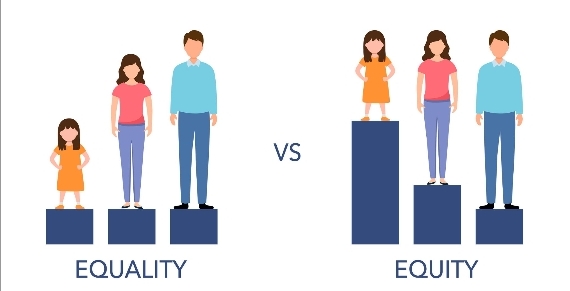
Understanding the Shift to EquityThis gap in outcome gave rise to a complementary doctrine: equity. While equality focuses on giving everyone the same thing, equity focuses on giving everyone what they need to succeed.The World Health Organization (WHO) defines equity as the absence of avoidable or remediable differences among groups of people, whether defined socially, economically, demographically, or geographically. At its core, equity is about fairness, justice, and recognizing individual contexts.
The World Health Organization (WHO) defines equity as the absence of avoidable or remediable differences among groups of people, whether defined socially, economically, demographically, or geographically. At its core, equity is about fairness, justice, and recognizing individual contexts.
Primary Goal: Equality aims for uniformity and identical distribution, whereas Equity seeks fairness and a proportional outcome.
Focus: Equality focuses on treating everyone the same, while Equity focuses on treating people justly based on their specific circumstances.Assumption: Equality assumes that everyone starts from the same baseline.
Equity recognizes that historical and physical barriers exist.
Result: Equality leads to equal input, whereas Equity results in an equal opportunity for success (equal output).
The Real-World Conflict: Identical vs. Fair Treatment misunderstanding the distinction between these two concepts frequently leads to operational friction.Consider a workplace scenario involving two employees: Mr. A, who has no physical limitations, and Mr. B, who is visually impaired.
The Indivisible DuoIt is a mistake to view equality and equity as opposing forces. Instead, they form an interdependent foundation for human rights:Equality provides the destination: It sets the universal standard that every human being deserves equal dignity, rights, and respect.Equity provides the route: It supplies the specific accommodations, accommodations, and systemic changes required to make that universal standard attainable for diverse individuals.
As Paula Dressel of the Race Matters Institute noted:
"The route to achieving equity will not be accomplished through treating everyone equally. It will be achieved by treating everyone justly according to their circumstances."
Relying on equality alone produces rigidity that ignores systemic barriers; relying on equity without equality risks losing sight of the universal rights every person deserves. True social progress requires both doctrines working together—using equality as the goal and equity as the vehicle to reach it.